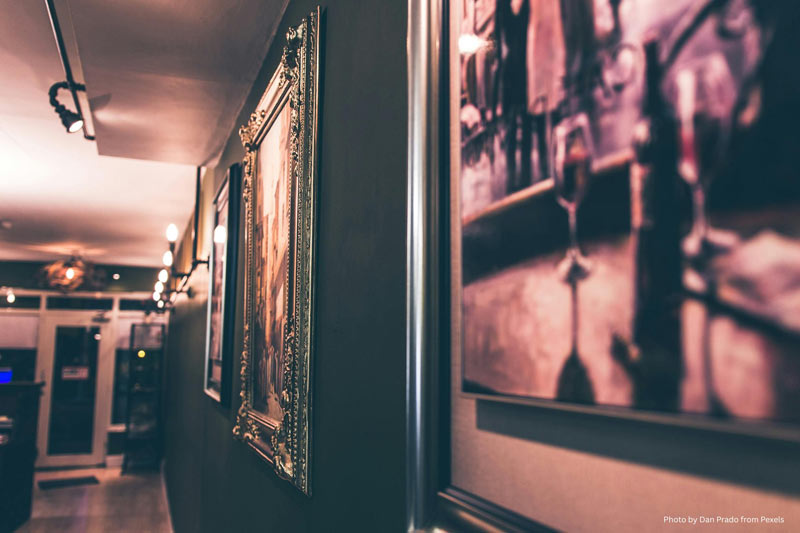
Lighting determines how artwork is seen. The color, depth, and texture all depend on it. For collectors, designers, gallery curators, and artists, the choice between wall sconces and chandeliers is not simply about brightness. It’s about placement and how the light interacts with surfaces.
In spaces featuring fine art or collectible design, a single light source may not always deliver consistent results. Designers address this by combining these lighting fixtures, using each for a specific purpose. The result is a controlled, layered environment that supports both the artwork and the room.
What Makes Rene Lalique Pieces Unique?
Rene Lalique wall sconces provide directional light at eye level. This placement allows them to illuminate artwork directly without casting strong shadows from above.
Designers use sconces to:
- Light artwork evenly across its surface
- Reduce glare on glass, varnish, or polished materials
- Introduce sculptural elements that also serve as light sources
Lalique glass softens and diffuses light, preventing harsh hotspots. This makes sconces especially effective for displaying detailed or textured pieces.
When Rene Lalique Chandeliers Take Center Stage
Rene Lalique Chandeliers establish the overall light level in a room. Positioned overhead, they distribute light across a wide area and define the room’s visual center.
Designers rely on chandeliers to:
- Light large spaces consistently
- Establish scale in rooms with high ceilings
- Anchor the layout of a gallery or salon
On their own, however, chandeliers often leave walls underlit. This creates a visible contrast between bright ceilings and darker vertical surfaces, which can reduce the clarity of displayed artwork.
Why Designers Layer Light Instead of Choosing One
A single fixture cannot handle both general illumination and precise highlighting. Designers solve this by assigning different roles to each light source.
A layered lighting plan includes:
- Ambient lighting: Provided by chandeliers to set the overall brightness
- Accent lighting: Delivered by sconces to highlight artwork
This separation improves visibility. Artwork remains evenly lit, while the room maintains consistent brightness from floor to ceiling.
How to Combine Wall Sconces and Chandeliers Effectively
Successful lighting depends on placement and balance. Small adjustments in position or intensity can change how a piece is perceived.
Key strategies:
- Install sconces on either side of artwork to distribute light evenly
- Keep chandelier output moderate to avoid overpowering wall lighting
- Maintain consistent spacing between sconces for visual order
- Select finishes that align with Lalique glass to avoid visual conflict
Each fixture should support a defined role. When placed correctly, neither competes for attention.
Best Applications for Art Collectors and Galleries
Different areas require different lighting approaches.
Wall Sconces are well-suited for:
- Private collections where close viewing matters
- Hallways where artwork is viewed in sequence
- Smaller rooms that require controlled lighting
Chandeliers perform best in:
- Entry spaces that require immediate visibility
- Large galleries with high ceilings
- Rooms where the overall brightness must be consistent
Using both allows for clear visibility at every level—overhead and at eye line.
Common Mistakes to Avoid
Lighting errors often reduce detail and create imbalance.
Avoid the following:
- Excessive brightness that removes contrast from artwork
- Incorrect sconce height, leading to uneven illumination
- Mixing styles that distract from Lalique pieces
- Depending only on overhead lighting
Each issue affects how clearly artwork can be viewed.
FAQs: Rene Lalique Wall Sconces vs Chandeliers
- Are Rene Lalique wall sconces better than chandeliers for art display?
They serve different purposes. Sconces highlight artwork directly, while chandeliers provide general illumination. - How high should wall sconces be installed?
Install them at eye level, typically 60–66 inches from the floor. - Can sconces replace chandeliers in smaller galleries?
Yes. In compact spaces, sconces can provide sufficient light without additional overhead fixtures. - Do Lalique-style chandeliers work in modern interiors?
Yes. Their form contrasts with modern architecture and adds visual structure. - How many sconces should be used on a gallery wall?
Spacing should remain consistent. The exact number depends on wall length and artwork size.
Summary: Choosing the Right Lighting Balance
Comparing Rene Lalique wall sconces and chandeliers as alternatives misses their intended use. Sconces control how light reaches the artwork, while chandeliers set the overall brightness of the room. Used together, they produce consistent, even lighting that supports both display and space.