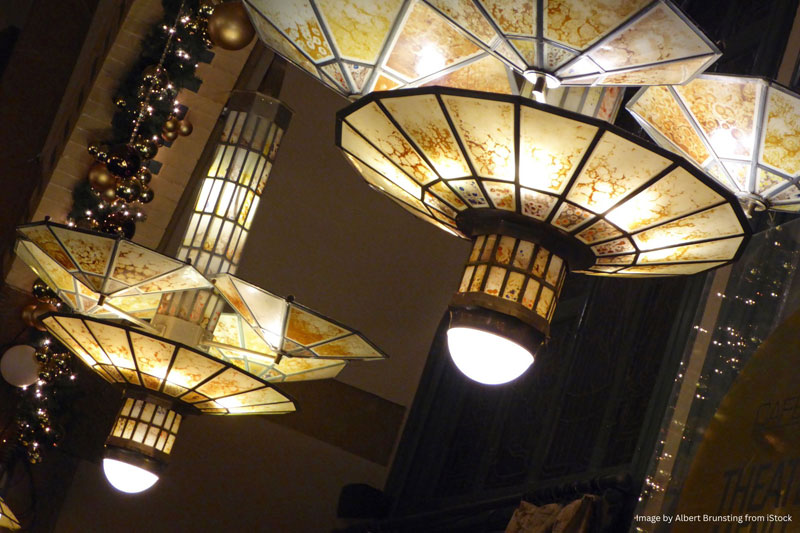
For collectors, designers, and architects, Lalique wall lights occupy a distinctive place between functional lighting and decorative art. René Lalique’s evolution from celebrated Art Nouveau jeweler to master glassmaker helped shape the visual language of Art Deco, particularly through his innovative use of architectural glass. His lighting designs demonstrate how illumination could become an integral part of an interior—serving not only a practical purpose but also contributing to the character and artistry of a space.
Identifying an important period Lalique wall light, however, requires more than recognizing the Lalique name. Its design, glasswork, construction, condition, provenance, and production period all provide important clues to its history, authenticity, and significance. Understanding these details offers a clearer appreciation of both the object itself and its place within Lalique’s broader body of work.
Why Are René Lalique Wall Lights Important to Art Deco?
By the 1920s, René Lalique was applying his knowledge of glass to increasingly ambitious architectural and interior projects. His work at the 1925 International Exhibition of Modern Decorative and Industrial Arts in Paris marked an important moment in both his career and the development of Art Deco.
One of Lalique’s defining techniques was the contrast between clear and frosted glass, sometimes enhanced through patina, enamel, or coloration. These treatments allowed glass to interact with light in nuanced ways. A fixture could diffuse illumination, emphasize molded relief, and create different visual effects when switched on or viewed in daylight.
Lalique also worked on major transportation interiors, including the Côte d’Azur Pullman Express and the ocean liner Normandie. Such commissions demonstrate the architectural scale of his practice and the role lighting played within it.
What Distinguishes René Lalique Art Deco Sconces?
René Lalique Art Deco sconces combine sculptural glass with controlled illumination. Their effect depends not only on the motif molded into the glass but also on what happens when light passes through it.
Collectors may encounter geometric patterns, stylized natural forms, pronounced relief, frosted surfaces, and areas of contrasting translucency. These details can give a sconce a markedly different appearance once illuminated.
That relationship between material and light reflects Lalique’s broader development as an artist. He first achieved prominence through jewelry, where unconventional materials and naturalistic forms helped define his Art Nouveau work. Glass later became a primary medium through which he explored architectural decoration and Art Deco design.
For an interior designer or architect, period Lalique wall sconces can therefore serve two purposes at once: providing illumination while functioning as historically significant decorative objects.
How Can Collectors Assess Authentic Lalique Wall Lights?
Authenticating Lalique wall lights requires examining the complete object. A signature is useful evidence, but it should never be the only factor.
Signatures and markings. René Lalique used markings during his career, and signature practices changed over time. The style, placement, and execution of a mark should make sense for the model and period being evaluated.
Glass and surface treatment. Examine the quality of molding, relief, translucency, frosting, finishing, and decorative treatment. These characteristics can help establish whether the glass is consistent with known period production.
Construction and fittings. Wall lights are functional objects, so many have been repaired, rewired, or altered. Mounts, hardware, electrical components, and replacement pieces should be evaluated separately from the glass itself.
Provenance and documentation. Invoices, collection records, period photographs, catalog references, and documented ownership can strengthen an attribution. Reliable provenance is particularly useful when evaluating rare models or fixtures with substantial alterations.
No individual characteristic proves authenticity on its own. Attribution is strongest when the physical object, markings, construction, documented model, and provenance support the same conclusion.
What Determines the Collector Value of Lalique Wall Sconces?
Value depends on more than the Lalique name.
Period, attribution, rarity, condition, provenance, design quality, and completeness can all influence the significance of Lalique wall lights. Original glass paired with appropriate mounts and documented history presents a different collecting proposition from a fixture assembled from replacement or heavily modified components.
Pairs can be especially noteworthy. Wall lighting was often designed around architectural symmetry, making an intact matching pair useful both as a collectible ensemble and within a historically informed interior.
Production period also matters. René Lalique died in 1945, after which his son Marc Lalique led the company into a new era associated with crystal production. Collectors should therefore distinguish René Lalique-period pieces from later Lalique works rather than treating everything bearing the Lalique name as equivalent.
Later Lalique can have substantial decorative and collectible interest. It simply belongs to a different historical context.
Why Do Lalique Wall Lights Still Appeal to Collectors and Designers?
Few decorative objects combine sculpture, architecture, and illumination as naturally as Lalique wall lights.
When unlit, a period sconce can be appreciated for its molded glass, surface treatment, proportions, and motif. Once illuminated, relief becomes more pronounced, translucent areas change character, and the fixture interacts with the surrounding wall and room.
That versatility helps explain the continued appeal of Lalique lighting among collectors, architects, and interior designers. Period examples also provide a direct connection to René Lalique’s experiments with glass during a formative period of Art Deco.
For collectors considering authentic Lalique antiques, careful identification remains essential. Attribution, condition, restoration, and provenance should be established before drawing conclusions about historical importance or collector value.
Frequently Asked Questions About Lalique Wall Lights
Are all Lalique wall sconces antiques?
No. Lalique has continued producing decorative objects and lighting beyond René Lalique’s lifetime. A fixture should be identified and dated before it is described as an antique René Lalique piece.
What distinguishes René Lalique Art Deco sconces?
Period examples may feature molded relief, frosted and transparent glass, stylized natural or geometric motifs, and designs intended to transform when illuminated. Identification should be based on the complete object rather than appearance alone.
How can I tell whether Lalique wall lights are authentic?
Examine the signature, glass quality, construction, hardware, condition, documented model, and provenance together. Important or unusually valuable pieces may warrant specialist examination.
Does rewiring affect the value of Lalique wall sconces?
It can. The effect depends on the extent of the alteration and whether historically significant components were removed or changed. Electrical safety and collectible originality are separate considerations.
Why can matching pairs of Lalique wall lights be significant?
Wall sconces were often installed symmetrically. A surviving matching pair can retain that architectural relationship while offering collectors a more complete decorative ensemble.
Summary: Evaluate Lalique Lighting in Context
The most useful way to assess Lalique wall lights is to consider the entire object: its design, glass, construction, period, condition, provenance, and documented history.
René Lalique’s contribution to architectural glass gives period wall sconces significance beyond their practical function. For collectors and design professionals, careful research can reveal whether a fixture is simply attractive, an important example of Lalique lighting, or a noteworthy work within the history of Art Deco decorative arts.